Let’s explore the famous sites in Turkey. It’s a nation that bridges Europe and Asia, boasting a decorated history, a rich culture, and spectacular natural beauty
From ancient archaeological wonders to stunning landscapes and vibrant cities, Turkey offers a diverse array of experiences for curious travellers. In this blog, we will explore twelve famous sites in Turkey that are not to be missed.
Some Interesting Historical Facts About Turkey :
- The first seven Christian councils, including the First Council of Nicaea in 325 AD, were held in present-day Turkey
- The Lycians, who were ancient people of Anatolia, carved elaborate tombs into cliffs.
- The village of Kuşköy in Turkey is known for its unique whistling language.
- Turkey is home to some of the world’s oldest and most famous covered markets
- The Ottoman Empire, founded in the late 13th century was founded in Anatolia
- Mount Ararat in eastern Turkey is traditionally associated with the biblical story of Noah’s Ark.
- The Hagia Sophia in Istanbul was originally built as a cathedral in 537 AD
- Göbekli Tepe, a Neolithic site in Turkey, is believed to be one of the world’s oldest temples, dating back to around 9600 BC.
The Historic Structure of Hagia Sophia (Ayasofya)
1. Hagia Sophia (Ayasofya): In Istanbul is a historic structure with a rich and diverse history. Originally built as a cathedral, it later transformed into a mosque and is now a museum. Its architectural significance lies in its iconic dome, which is a symbol of Turkey’s history and culture.

This impressive building reflects a unique blend of Byzantine and Ottoman architectural styles. While the Hagia Sophia is no longer used for religious purposes, it still retains a sense of spirituality and grandeur, evident in its interior adorned with captivating mosaics and intricate designs.
Its historical importance and architectural beauty make it an essential stop for those interested in the cultural and historical aspects of Turkey.
The Intriguing Cappadocia
2. Cappadocia: Cappadocia, in central Turkey, is a distinct region known for its extraordinary geological formations, including unique rock formations and underground cities. This surreal landscape has been sculpted by natural forces over time. The area is renowned for its rock-cut dwellings and churches, making it a fascinating historical and cultural site.

Visitors can explore ancient subterranean cities, hike through the remarkable terrain, and witness hot air balloons filling the skies during dawn.
Cappadocia’s landscape, marked by its cone-shaped rock formations, offers a mesmerizing and unforgettable experience for those seeking a glimpse of nature’s geological wonders and the history of human habitation in this extraordinary setting.
The Ruins of Ephesus (Efes)
3. Ephesus (Efes): Ephesus, or Efes, located in modern-day Turkey, is a well-preserved ancient city steeped in historical significance. This archaeological site, renowned for its historical importance, is a testament to the grandeur of the Roman era. It was a major hub for trade, culture, and spirituality during its prime.

The ruins of Ephesus, while extensive, provide an essential insight into this ancient civilization, boasting structures like the Library of Celsus and the Temple of Artemis. Ephesus is particularly notable for its Roman-era architecture, including well-preserved streets and amphitheaters, offering a glimpse into daily life in antiquity.
Despite its age, Ephesus still manages to captivate visitors with its historical allure and serves as an educational and culturally enriching destination for history enthusiasts and curious travelers alike.
The Terraces of Pamukkale
4. Pamukkale: Pamukkale, situated in southwestern Turkey, is a natural wonder known for its terraces of white mineral-rich deposits. These terraces, formed by hot springs, cascade down the mountainside, creating a striking visual. Visitors are allowed to walk on some of these terraces and even swim in pools filled with the mineral-rich water.
The site has a surreal appearance, with its white formations resembling cotton, hence the nickname “Cotton Castle.” Pamukkale’s natural beauty is complemented by the nearby ancient city of Hierapolis, where visitors can explore well-preserved ruins, including a theater and a necropolis.
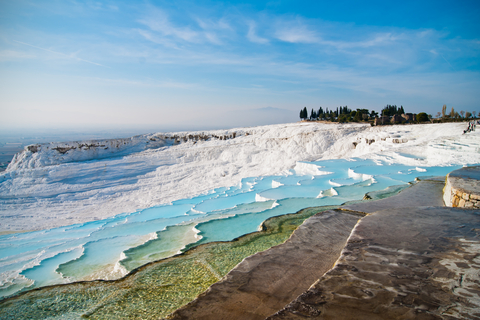
Both the natural and historical elements of Pamukkale offer a unique and visually captivating experience, making it a popular destination for those seeking a blend of natural beauty and historical exploration.
WHAT IS FUKUOKA KNOWN FOR Asia -
WHAT IS FUKUOKA KNOWN FOR Africa -
WHAT IS FUKUOKA KNOWN FOR Europe -
WHAT IS FUKUOKA KNOWN FOR The Middle East -
WHAT IS FUKUOKA KNOWN FOR South America -
Amazing article…A fascinating and most enjoyable read.CloudZone.
ReplyDelete